Also known as Androgen Deprivation Therapy (ADT) or Androgen Suppression Therapy (AST), hormone therapy is a type of treatment for men who are suffering from advanced prostate cancer. Hormones in your body are meant to control the growth and activities of normal cells. One such important hormone in a male body is called testosterone which is made by the testicles. The function of hormone therapy is to control the growth or lower the amount of testosterone as prostate cancer depends on testosterone to grow. Hence, the therapy is useful in shrinking an advanced prostate cancer as well as slowing its growth. Also known as Androgen Deprivation Therapy (ADT) or Androgen Suppression Therapy (AST), hormone therapy is a type of treatment for men who are suffering from advanced prostate cancer. Hormones in your body are meant to control the growth and activities of normal cells. One such important hormone in a male body is called testosterone which is made by the testicles. The function of hormone therapy is to control the growth or lower the amount of testosterone as prostate cancer depends on testosterone to grow.
Hence, the therapy is useful in shrinking an advanced prostate cancer as well as slowing its growth.
Following are the types of hormone therapy:
Hormone Therapy works best on men:
The therapy has certain advantages such as controlling your cancer that has probably spread to other parts of your body. It can also be used alongside other treatments. The symptoms of advanced prostate cancer will be reduced. To check whether the therapy is working or not, the doctor will monitor your Prostate Specific Antigen (PSA) levels. A fall on your PSA level suggests that the treatment is working whereas a rise on your PSA level is a negative sign that the cancer is not responding to the treatment. The doctor then will offer other types of hormone therapy to you.
For any health related queries contact us at
Email: care@hbgmedicalassistance.com
Call or what’s app: +91-9289135264
What is a stroke?
The sudden death of brain cells due to lack of oxygen, caused by blockage of blood flow or rupture of an artery to the brain. Sudden loss of speech, weakness, or paralysis of one side of the body can be symptoms. A suspected stroke may be confirmed by scanning the brain with special X-ray tests, such as CAT scans. The death rate and level of disability resulting from strokes can be dramatically reduced by immediate and appropriate medical care. Prevention involves minimizing risk factors, such as controlling high blood pressure and diabetes. Abbreviated CVA. Also known as cerebrovascular accident. So, what is stroke rehabilitation treatment?
What Is Paralysis?
Paralysis is one of the most common disabilities following a stroke. Paralysis is usually on the side of the body opposite the side of the brain damaged by stroke and may affect the face, an arm, a leg, or the entire side of the body. Paralysis can affect any body part and impair body functions in several ways. As a result, there are several types of Paralysis. However, based on the body region involved there are 4 main types of Paralysis.
Ayurveda is the best ever treatment method for Stroke Rehabilitation
According to Ayurveda, a Stroke is called Pakshaghata. Caused due to the vitiation of Vata dosha, which controls the motor and sensory activities in the body.
The line of treatment is to bring back the motor and sensory functions of the brain. Internal medicines boost the blood supply and natural antioxidants increase the oxygenation to the brain, rejuvenates the brain cells, and decrease cell death. The external therapies and panchakarma improve the functioning of the peripheral nervous system. The heat modalities in therapy maintain the muscle tone and reduce muscle spasm/ stiffness.
The patients suffer from hemorrhage or clots in the brain tissue. This leads to the inhibition of various body functions or gets manifests as convulsion. According to our experts in ayurvedic treatment for stroke, it is thought that the vaata movement is blocked because of which the symptoms are manifested. Hence, our therapies are aimed at restoring the flow of Vaata in the body and excrete the toxins summed up in the body. As a result, our therapies include multiple features, all of which work in the quick recovery of your patient. Our trained and experienced ayurvedic doctors have a wide range of treatments for the patients so that the internal toxins are removed. Besides, ayurvedic oil massages and enema use helps in the restoration of the muscle functions across the body. These methods are not only tested across ages but have been scientifically proved to be effective for stroke patients.
Ayurvedic Treatment for Paralysis
Considering the stage of the paralysis, for how long the patient has had this condition as well as their strength, and optimized treatment plan is formed by our senior physicians. If the paralysis is of recent onset, then medication such as DhanwantramKashayam, etc. is prescribed along with some mild treatments like Abhyanga (Application of medicated oil on the body), or Kaya Seka (pouring of warm medicated oil on the body).
A patient who has had paralysis due to a stroke for longer than one year requires more extensive treatment. This is because half of the body has been inactive for so long that the muscles start to waste away (no longer have the strength to function). Hence, the treatment plan usually has five stages.
Various Medicines used for Paralysis or stroke treatment in Ayurveda:
Physiotherapy also contributes equally to improving the condition of the patient through various therapies and stroke rehabilitation exercises at home.
Advantages of Ayurvedic and Physiotherapy Rehabilitation
Now, you can get Ayurveda Treatments at home. For any queries feel free to reach us at
Email: care@hbgmedicalassistance.com
Website: www.hbgmedicalassistance.com/contact-us
Call or WhatsApp: +91-9910772993
Do you know the role of the prostate gland in a man’s body? This male reproductive organ termed as prostate gland secretes a prostate fluid which is an important component of semen. The prostate fluid is responsible for the nourishment of sperms. It helps in liquefying the semen and after ejaculation, the sperms smoothly move into the woman’s body. During the surgery or therapy, if the doctor finds the cancer present in the prostate gland has reached its advanced stage, and then it becomes a mandate to remove the gland. On the other hand, the prostate gland is saved if the cancer cells found are minimal or at an early stage. In both cases, fathering a child through natural way would be impossible. Depending on the type of prostatectomy the patient has gone through, he would still be able to gain his sexual function.
How does prostate cancer treatment affect a man’s ability to ejaculate?
Following are the possibilities:
For men who desire to father a child after the prostate cancer treatment is possible only with artificial means. A doctor usually recommends freezing some of his sperms for later use and fathering a child through the procedure of IVF. Another possible way is extracting sperm directly from the testicles.
What is the alternate to Prostatectomy?
There are multiple alternate therapies to Prostrate Surgery – Such as
However, even if one may not be able to reproduce after the surgery, many patients are able to have safe sex afterward.
For any health-related queries contact us at
Email: care@hbgmedicalassistance.com
Call or what’s app: +91-9289135264
Targeted therapy is a treatment that targets the cancer’s specific genes, proteins, or the tissue environment that contributes to cancer growth and survival. This type of treatment blocks the growth and spread of cancer cells while limiting damage to normal cells. Recent studies show that not all tumors have the same targets. To find the most effective treatment, your doctor may run tests to identify the genes, proteins, and other factors in your tumor. For some lung cancers, abnormal proteins are found in unusually large amounts in the cancer cells. Running tests to find these proteins can help doctors better match each patient with the most effective treatment whenever possible. In addition, many research studies are taking place now to find out more about specific molecular targets and new treatments directed at them. Learn more about targeted treatments.
How Targeted Therapy Works In The Lung Cancer Treatment? :- To know how Targeted Therapy Works In The Lung Cancer Treatment – Click Here
To Know More about Lung Cancer and Treatments :- Click Here
For Cancer Treatment Details – Click Here
For Further Details on Lung Cancer Treatments
Radiation Therapy for Lung Cancer Treatment – Click Here
Chemotherapy for Lung Cancer Treatment – Click Here
Immunotherapy for Lung Cancer Treatment- Click Here
For Other Related Cancer Treatment
Breast Cancer Treatment: – To Read more on Breast Cancer Treatment – Click Here
Prostate Cancer Treatment: – To Read more on Prostate Cancer Treatment – Click Here
Best Hospitals for Lung Cancer Treatment
Apollo Hospital – For details of Lung Cancer treatment at Apollo Hospital- Click Here
Fortis Hospital – For details of Lung Cancer treatment at Fortis Hospital- Click Here
BLK Hospital – For details of Lung Cancer treatment at BLK Hospital- Click Here
Artemis Hospital – For details of Lung Cancer treatment at Artemis Hospital- Click Here
Medanta Hospital – For details of Lung Cancer treatment at Medanta Hospital- Click Here
KD Hospital – For details of Lung Cancer treatment at KD Hospital- Click Here
Aster Hospital – For details of Lung Cancer treatment at Aster Hospital- Click Here
Jaypee Hospital – For details of Lung Cancer treatment at Jaypee Hospital- Click Here
W-Pratiksha Hospital – For details of Lung Cancer treatment at W-Pratiksha Hospital- Click Here
FDA (US Food and Drug) 28th May 2021 – FDA Approves First Targeted Therapy for Lung Cancer Mutation Previously Considered Resistant to Drug Therapy
Today, the researchers are coming up with more and more ways to treat people diagnosed with lung cancer. One such new approach for lung cancer treatment is Immunotherapy which is giving hope. Also known as Biologic Therapy, Immunotherapy uses the body’s immune system to identify, attack, and kill the cancer cells in the lung(s). Out of the two types of lung cancer – Small Cell Lung Cancer (SCLC) and Non-Small Cell Lung Cancer (NSCLC), Immunotherapy has shown better results on the latter type. This type of therapy is mostly given to the patients who have reached the advanced stage of the cancer.
Treatment
Therapeutic vaccines, Adoptive T cell therapy and Immune checkpoint inhibitors are the types of Immunotherapy for the treatment of lung cancer.
Therapeutic Vaccines – The vaccines target the antigens found in lung cancer such as MAGE-3 and NY-SEO-1. Antigens are the characteristics of cancer cells on which the therapeutic vaccines work. Other vaccines have also been discovered which are still on the stage of trials and tests.
Adoptive T Cell Therapy – This therapy removes the T cells from the patient’s body and are re-programmed so that they destroy the cancer cells when placed back inside the body.
Immune Checkpoint Inhibitors – Our immunity system carries molecules that prevent the attack to normal cells and tissues. However, these molecules are used as a checkpoint by both normal cells and tissues and cancer cells. It creates a problem as a checkpoint won’t be able to detect cancer cells in the immune system. The major role of the immune checkpoint inhibitors is exactly to stop these cancer cells from using the checkpoints. Then it becomes clear for the immune system to detect the cancer cells and destroy them. Certain drugs are used as immune checkpoint inhibitors in this type of Immunotherapy.
Transurethral Resection of the Prostate (TURP) is a surgery used in treating prostrate cancer and urinary problems due to an enlarged prostate. This type of surgery generally considered an option for men with early stage prostrate cancer and also for moderate to severe urinary problems that haven’t responded to medication. Traditionally, TURP has been considered the most effective treatment for an enlarged prostate and prostrate cancers.
TURP also helps to reduce the following urine-related “symptoms” caused by Benign Prostatic Hyperplasia (BPH):
This surgery is also possibly done to treat or prevent complications due to blocked urine flow such as:
Treatment
Before surgery, your doctor might recommend you to refrain from taking medications that increase your risk of bleeding that include blood thinning medicines as well as non-prescription pain relievers.
The treatment of TURP is less time consuming which is generally ninety minutes maximum. Before surgery you’ll be given either general anesthesia (you will be unconscious during the procedure) or spinal anesthesia (you will remain conscious). A dose of antibiotics could also be given to you to prevent infection. During the procedure, the resectoscope is inserted into the tip of your penis and extended through your urethra and into the prostate area. The use of resectoscope is to trim tissue from the inside of your prostate gland which is done as one small piece at a time. As small pieces of tissue are cut from inside your prostate, irrigating fluid carries them into your bladder. They are removed at the end of the operation. After the procedure, you may have to stay in the hospital for a couple of days. A swelling may occur that blocks urine flow. Therefore, a urinary catheter is placed. The catheter is generally left in place for at least twenty four to forty eight hours. Once the swelling starts declining, you will not require any assistance to urinate. TURP results in most men experiencing a significantly stronger urine flow within a few days. Follow-up treatment to ease symptoms is sometimes needed, particularly after passing several years.
HoLEP which stands for Holmium Laser Enucleation of the prostate (HoLEP) is a modern alternative to the standard Transurethral Resection of the Prostate (TURP) procedure for bladder outflow obstruction. It is a surgical intervention that removes obstructive BPH (Benign Prostatic Hyperplasia) tissue via enucleation and morcellation. BPH is a medical condition of mostly older men. HoLEP can be performed on men of any age with urinary outflow obstruction caused by an enlarged prostate. It is particularly indicated in men with large prostates and men on medications to thin the blood such as warfarin, aspirin, or clopidogrel. The treatment requires a short period of hospitalization and an anesthetic. A catheter (a tube that drains the bladder) is also needed for one to two days until the urine clears. Patients are advised to take life quietly and to avoid straining or heavy lifting for four weeks after the surgery.
HoLEP is performed transurethrally, using a holmium laser to separate the plane between the prostate gland tissue and the prostate capsule. This procedure allows complete resection of all adenomatous tissue, minimizing the need for future re-treatment. The treatment of HoLEP relieves pressure on the tube through which the urine drains (urethra) by anatomically enucleating the majority of excess benign prostate tissue. This is done under a general anaesthetic with the help of a telescopic camera inserted through the penis. The three lobes of the prostate that are cored out intact are pushed into the bladder before being sucked up (morcellated) by a special instrument inserted through the telescopic camera. The pieces are sent for laboratory analysis just in case they might be found to be cancerous. A catheter is placed into the bladder to drain the urine while the raw surface heals, then left in place for around twenty four hours before being removed on the day of discharge from hospital. Sterile saline fluid is also irrigated into the bladder through the catheter to dilute any blood in the urine and prevent the formation of clots.
Email: care@hbgmedicalassistance.com or komal@hbgmedicalassistance.com
Call: +91-9810604028 or 012-44388972
HIFU stands for High-Intensity Focused Ultrasound, is a type of ultrasound that uses high-frequency ultrasound energy to heat and destroy cancer cells in the prostate. HIFU is newer than some of the other treatments for prostate cancer. There are two types of HIFU treatment. Whole-prostate HIFU treats the whole prostate. Focal HIFU treats a smaller area of the prostate.
● HIFU might be suitable for you if your cancer is contained inside your prostate.
● It’s sometimes an option if your prostate cancer has started to break out of your prostate, or has spread to the surrounding area.
● It’s not an option if your cancer has spread outside your prostate to other parts of your body.
● It can also be used to treat cancer that has come back after radiotherapy (recurrent prostate cancer). This is called salvage HIFU.
The recovery time is short which usually takes one or two weeks. The stay required in the hospital is a short one. You can go home on the same day depending on your treatment. The advantage of HIFU is apart from a needle in your hand to give the general anaesthetic, it doesn’t involve any cuts to the skin or needles. In rare cases, if your cancer comes back after your first HIFU treatment, you still may be able to have HIFU again. Surgery and Radiotherapy are other options of treatment after HIFU if your cancer comes back.
Depending on the size of the prostate, you might be suggested to go for other treatments before HIFU. If you have a large prostate, the following treatments could be offered to you:
Before the treatment starts, you will be asked not to eat or drink for at least six hours before. On the morning of your treatment, you’ll be given an enema (liquid) to empty your bowels which will be put inside your back passage (rectum). You will have a general anaesthetic so that you’re asleep during the treatment. However, if you aren’t able to have a general anaesthetic for some health reasons, you may be able to have a spinal (epidural) anaesthetic so that you can’t feel anything in your lower body. You will also be given some medicine (a sedative) to make you sleepy. You may have a catheter (a thin tube) put in at the start of the treatment to drain urine out of your bladder. This catheter is passed into your bladder, either through the penis or through the wall of your abdomen. The surgeon will place a probe inside your back passage (rectum). The probe gives out a beam of high-intensity ultrasound energy, which travels through the wall of the back passage into the prostate. The probe is surrounded by a cooling balloon so that the heat doesn’t damage your back passage. The beam treats one small area of the prostate at a time, almost the size of a grain of rice. He will move the beam around so that it heats and destroys the cancer cells. The probe also uses ultrasound to create images of the prostate while the surgeon is treating it. This helps him target cancer so that less of the healthy tissue is damaged.
For any health-related queries contact us at
Email: care@hbgmedicalassistance.com or komal@hbgmedicalassistance.com
Call: +91-9810604028 or 012-44388972
The symptoms of breast cancer in men are more like that in women.
If you have noticed the following changes on your breast(s), you should immediately contact your doctor:
Earlier diagnosis can make a life-saving difference!
Tests such as MRI, blood test, chest X-ray and bone scan are helpful to check the spread of cancer in breasts to other parts of the body. Once you have noticed the above symptoms, one of the following tests will be done to diagnose cancer:
In this test, an X-ray picture of the breast is taken. Two pictures are taken of the breast after it is compressed between two glass plates. One image is shot from the top and the second picture is taken from the side. An expert will detect the abnormality if there is any. He or she may then decide to get other pictures of a certain area. These are called spot or magnification views.
Ultrasound is helpful in determining the presence of a solid lump. It cannot detect whether that lump is cancerous or not. Ultrasound sends high-frequency sound waves through your breast and converts them into images on a viewing screen. Ultrasound complements other tests. If an abnormality is seen on mammography or felt by physical exam, ultrasound is the best way to find out if the abnormality is solid (such as a benign fibroadenoma or cancer) or fluid-filled (such as a benign cyst).
If you have been getting nipple discharge, it may not be a good sign. The discharged fluid will be collected and examined under a microscope to see if any cancer cells are present.
A biopsy is helpful to distinguish normal tissue from cancer tissue. If cancer is present, the biopsy also helps your doctor to determine the size, type, and kind of breast cancer. Biopsies are performed on any kind of abnormality that your doctor can feel or that looks suspicious. Various techniques are used to biopsy tissue, and it’s likely that your surgeon will try to use the least invasive procedure possible while making sure that enough tissue is removed to make a clear diagnosis. Biopsy further has four different variations – Fine needle biopsy, Stereotactic needle biopsy, Incisional biopsy, and Excisional biopsy.
For any health-related queries contact us at
Email: care@hbgmedicalassistance.com
Call: +91-9810604028 or 012-44388972
Glad to share that HBG Medical Assistance helped a 4.5 Months baby- Amgad Madgi Altag from Sudan for Arterial Switch Surgery in India. The Cardiac Surgery was performed by one of our best Surgeon- Dr. Sushant Srivastava at BLK Hospitals.
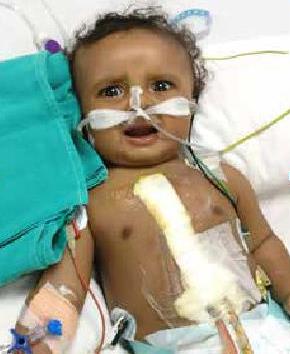
Baby Amgad was diagnosed with TGA (Transportation of the Great Arteries) which is congenital heart defect. His parents approached HBG and travelled to India. Post ECHO and other investigations, it was found that the baby had considerably left ventricle and no longer thought to be capable of of pumping in systemic circulation.
Dr. Sushant Srivastava suggested Arterial Switch Surgery and it was performed successfully with only three incisions ; 2 incisions in the wall of right and left Arteria and 1 in the Arterial Septum. The surgery ensured that the blood from superior vena cava ( SVC) and Inferior Vena Cava( IVC) is diverted into the left Ventricle and the pulmonary artery and oxygenated pulmonary venous blood is diverted into the right ventricle and Aorta. During the surgery patient was put on the Heart and Lungs Machine and cooled at 28 degree.
Post-surgery Patient recovered very well and baby was discharged from Hospital on 8th post-operative day. During the follow up, the child improved dramatically and gained weight . Post needful recuperation the child travelled back with parents all in smile having successfully gone through a rare heart surgery.
Complex congenital heart disease requires precise early diagnosis and complex surgery. If timely Surgery is done, Results are gratifying.





Cancer Treatment in India, VSD Closure (Ventricular Septal Defect), ASD Closure Surgery (Atrial Septal Defect), Heart hole closure surgery in india, Brain Tumour Surgery in India, Craniotomy Surgery for Treatment of Brain Tumour in India, Brain Stem Glioma Treatment in India, Deep Brain Stimulation surgery in india , Best Spine Surgery In India , Cervical Spine Disorders Surgery and Treatment in india , epilepsy surgery in india , Heart Surgery in india , Best open heart surgery hospital in India , All about Spine Surgery, Types of Back Surgery , Top Doctors In India , Best Hospitals in India , Bhavin Desai cardiac surgeon, Best kidney transplant doctor in IndiaBest hospital for limb lengthening surgery in India, Best hospital for neurosurgery in India, Best hospital for bypass surgery in India, Narayana Hrudayalaya online appointment, Best orthopedic hospital in Bangalore, Best open heart surgery hospital in India, Best bypass surgeon in India, best spine surgery hospital in India, Artemis hospital Gurgaon, KD hospital medical appointment
Limb lengthening surgery cost in India, DSA test, Diabetes treatment in India