What is Scoliosis in the spine?
Scoliosis is a curve in the spine (backbone) that is often diagnosed in adolescent age. In a local language this also called crooked spine. The angle of the curve may be small, large, or somewhere in between. In most cases scoliosis is mild, but some curves grow severe as children grow. Also, severe spinal curves can reduce the amount of space within the chest making it difficult for the lungs to function properly. The curve also gives an abnormal structure to the spine and the whole body loses its balance. To add, it gives a lot of social and mental pressure to the growing child. Doctors may use the alphabets “C” and “S” to describe the curve.
The severity of Scoliosis is calculated as at what angle the spine has curved. This calculation of curve is known as the Cobb Angle, is the best medical method used to diagnose and track the severity of spinal curvature. A measurement of 10 degrees or more qualifies as Scoliosis.
A Cobb’s angel of 45 degrees or more qualifies for a surgical correction. The surgical correction is best done between the age of 12 and 18. We can do the corrective surgery even after 18 years of age but the best results come between 12 years and 18 years.
What are the signs and symptoms of Scoliosis?
- A visible curve in the back
- Shoulders, hips, or waist that looks uneven
- One side of the rib cage extends forward
- Uneven shoulder blades
Other symptoms related to this can be:
- Back Stiffness
- Lower back pain
- Fatigue due to muscle strain
- Pain and numbness in the legs due to a pinched nerve
What can be the causes of Scoliosis?
Well, the main cause is unknown but some hereditary factors may be involved. Less common types of Scoliosis may be caused by –
- Previous surgery on the chest wall as a baby
- Spinal cord abnormalities
- Injuries or infections of the spine
- Birth defects affecting spinal development
What are different Types of Scoliosis?
- Idiopathic Scoliosis – It occurs in as many as 80% of cases where the cause is unknown. There is no exact reason for the curved spine.
- Congenital Scoliosis – This occurs when there is an embryological malformation of one or more vertebrae. Doctors may spot this rare condition when the child is born or may not be able to detect it until the teen years.
- Neuromuscular Scoliosis – This type is associated with cerebral palsy, muscular dystrophy, spina bifida, and spinal cord trauma. It generally progresses more rapidly than idiopathic scoliosis and often requires surgical treatment.
How can Scoliosis be diagnosed?
Scoliosis is generally diagnosed by physical examination, an X-ray, spinal radiograph, CT scan or MRI. The curve is measured by the Cobb Method and is diagnosed in terms of severity by the number of degrees of the curvature. A positive diagnosis of scoliosis is made based on a coronal curvature measured on a posterior-anterior radiograph of greater than 10 degrees. In general, a curve is considered significant if it is greater than 25 to 30 degrees. Curves exceeding 45 to 50 degrees are considered severe and often require more advancing treatment.
What are different kinds of Scoliosis correction treatments are available in India?
- Observation – Somewhere about 90% of idiopathic scoliosis cases are mild and can be kept under observation until the person has reached full skeletal maturity.
- Braces – If the child’s bones are still developing and have moderate scoliosis, the doctor may recommend a brace. Wearing a brace won’t cure scoliosis or reverse the curve, but it prevents the curve from getting more severe. Most braces are worn between 13-16 hours a day depending upon their severity. Its effectiveness increases with the number of hours a day it is worn. They are discontinued when there is no further growth in height.
- Surgery – Severe scoliosis typically progresses with time, so a scoliosis surgery may be required to help straighten the curve and prevent it from getting worse.
What are different kinds of surgery available in India for Scoliosis Correction ?
- Spinal fusion – In this surgery, the doctors work at multiple levels of Vertebrae to correct the spinal curve. The doctors keep correcting the alignment of each level of vertebrae by putting the disc back in space and then fixing the vertebrae with the help of very tiny screws and rods. They carefully manoeuvre not to disturb any nerves that may be moving from the closer spinal cord. Modern surgical instrumentation includes the fixing of vertebral joints with tiny metal rods, hooks, screws or wires which hold that part of the spine straight and still while the old and new bone material fuses. An advantage to spinal fusion surgery is that it has long-term safety and efficacy for treating scoliosis. Today’s modern methods tend to fuse fewer vertebrae and maintain more mobility than in past.
- Expanding rod – If the scoliosis is growing rapidly at a young age, surgeons can attach one or two expandable rods along the spine so that it can adjust in length as the child grows. The rods are lengthened every 3 to 6 months either with surgery.
- Vertebral body tethering – It involves placing screws on the outer side of the curve and then pulling them firmly with a cord so the spine straightens. Compared to spinal fusion, fusion less surgery has the possible benefit of retaining more spinal mobility. However, this is a newer approach and long-term data about the risks and benefits are not yet known.
What outcomes do we expect from Scoliosis Correction Surgery done in India?
Which are Some of the Best Scoliosis Correction Surgeons in India ?
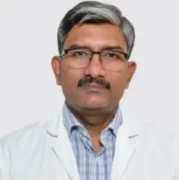
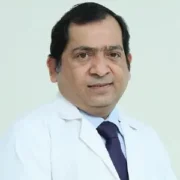
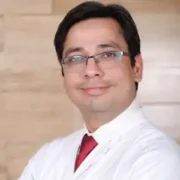
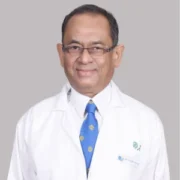
- Best Spine Surgeon in Medanta Hospital, Gurgaon, New Delhi- Dr. Karanjit Singh Narang
-
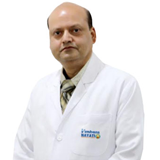
Best Spine Surgeon in Shalby International Hospital Gurgaon, New Delhi- Dr. Harnarayan Singh
-
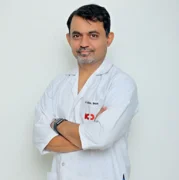
Best Spine Surgeon in Hiranandani Hospitals, Mumbai – Dr. Sachin Giri.
-
Best Spine Surgeon in Fortis Hospital, Mumbai- Dr. Vikas Gupta
-
Best Spine Surgeon in Artemis Hospital Gurgaon, New Delhi- Dr. Hitesh Garg
-
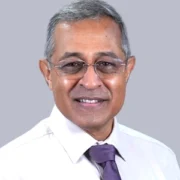
Best Spine Surgeon Apollo Hospital New Delhi- Dr. Rajendra Prasad
- Best Spine Surgeon Shalby Internation Hospital- Dr. Rajesh Verma
-
Best Spine Surgeon in Manipal Hospitals, New Delhi – Dr. Hamza Sheikh
- Best Spine & Neurosurgeon in BLK Hospital- Dr. Puneet Girdhar
-
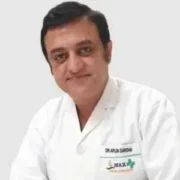
Best Spine & Neurosurgeon in Max Hospital Gurgaon, New Delhi- Dr. Arun Saroha
-
Best Spine Surgeon at Sarvodaya Hospital, Faridabad, New Delhi – Dr. Ashish Tomar.
Which are the best Hospitals For Scoliosis Correction Surgery in India?
What is the cost of Spine Surgery in India? Does HBG Medical Assistance helps in reducing the costs?
| Hospital Name | Price Range | Price in INR | Doctor Name |
|---|---|---|---|
| Artemis | $10000 – $11000 | INR 900000 +/-10% | Dr. Hitesh Garg |
| BLK | $11000 – $12000 | INR 1000000+/-10% | Dr. Puneet Girdhar |
| Sanar | $10000 – $11000 | INR 900000 +/-10% | Dr. Rajesh Verma |
| Max Hospitals | $10500 -$11500 | INR 950000 +/-10% | Dr. Arun Saroha |
| Hiranandani Hospitals | $12500 -$14500 | INR 1100000 +/-10% | Dr. Sachin Giri |
| Sarvodaya Hospitals | $9500 -$10500 | INR 850000 +/-10% | Dr. Pradeep K Singh |
The Medical Content for this page as been provided by Dr. Puneet Girdhar.