About
Resources
Hospitals
Doctors
Treatments Cost
Get Assistance
Modern Treatments
Ayurveda Treatments
Best Doctors In India
Best Hospitals In India

Liver Transplant in India

About Liver Transplantation Treatment in India

Liver transplant treatments in India-

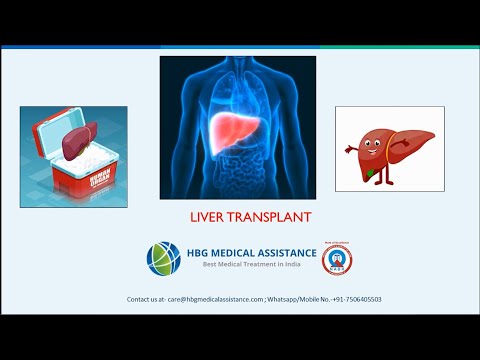
The liver is the largest organ in the body. It is located in the upper right side of the abdomen, beneath the diaphragm, and on top of the stomach, right kidney, and intestines. Shaped like a cone, the liver is a dark reddish-brown organ that weighs about three pounds.

The liver holds about one pint (13 percent) of the body’s blood supply at any given moment. The liver consists of two main lobes. These lobules are connected to small ducts that connect with larger ducts to ultimately form the hepatic duct. The hepatic duct transports the bile (the fluid that helps break down fats and gets rid of wastes in the body) produced by the liver cells to the gallbladder and duodenum (the first part of the small intestine).

The liver carries out many important functions, such as:

  • Making bile and producing certain proteins for blood plasma
  • Changing food into energy
  • Clearing the blood of drugs and other poisonous substances
  • Regulating blood clotting

Reasons for the procedure:

liver transplant may be recommended for people who have end-stage liver disease (ESLD), a serious, life-threatening liver dysfunction. ESLD may result from various conditions of the liver.
The most common liver disease for which transplants are done is cirrhosis. Cirrhosis is a long-term disease of the liver in which a fiber-like tissue covers the organ and prevents toxins and poisonous substances from being removed. Other diseases that may progress to ESLD include, but are not limited to, the following:

  • Acute hepatic necrosis. This is the death of tissue in the liver.
  • Biliary atresia. A condition in which the bile ducts are absent or have developed abnormally.
  • Metabolic disease. Conditions that affect the chemical activity in cells that are affected by the liver.
  • Liver cancers. These are primary tumors (that start in the liver) that have not spread outside the liver.
  • Autoimmune hepatitis. A chronic inflammation of the liver, resulting in liver cell damage and destruction.

There may be other reasons for your doctor to recommend a liver transplant.

Risks of the procedure:

As with any surgery, complications can occur. Some complications from liver transplantation may include, but are not limited to, the following:

  • Bleeding
  • Infection
  • Blockage of the blood vessels to the new liver
  • Leakage of bile or blockage of bile ducts
  • Initial lack of function of new liver

The new liver may not function for a brief time after the transplant. The new liver may also be rejected. Rejection is a normal reaction of the body to a foreign object or tissue. When a new liver is transplanted into a recipient’s body, the immune system reacts to what it perceives as a threat and attacks the new organ, not realizing that the transplanted liver is beneficial. To allow the organ to survive in a new body, medications must be taken to trick the immune system into accepting the transplant and not attacking it as a foreign object.

Contraindications for liver transplantation include, but are not limited to, the following:

  • Current or recurring infection that cannot be treated effectively
  • Metastatic cancer. This is cancer that has spread from its primary location to one or more additional locations in the body.
  • Severe cardiac or other medical problems preventing the ability to tolerate the surgical procedure
  • Serious conditions other than the liver disease that would not improve after transplantation
  • Noncompliance with the treatment regimen
  • Alcohol consumption

There may be other risks depending on your specific medical condition. Be sure to discuss any concerns with your doctor prior to the procedure.

Liver Transplantation – 

Liver transplantation is the replacement of a diseased liver with a healthy liver from another person. The liver may come from a deceased organ donor or from a living donor. Family members or individuals who are unrelated but make a good match may be able to donate a portion of their liver. This type of transplant is called a living transplant. Individuals who donate a portion of their liver can live healthy lives with the remaining liver.

An entire liver may be transplanted, or just a section. Because the liver is the only organ in the body able to regenerate, a transplanted portion of a liver can rebuild to normal capacity within weeks.
The donor’s liver is transported in a cooled salt-water (saline) solution that preserves the organ for up to 8 hours. The necessary tests can then be done to match the donor with the recipient.
The new liver is removed from the donor through a surgical cut in the upper abdomen. It is placed into the patient who needs the liver (called the recipient) and attached to the blood vessels and bile ducts. The operation may take up to 12 hours.

Indications:

  • Uncontrolled metastatic cancer outside the liver
  • Active drug
  • Alcohol abuse
  • Active septic infections
  • Infection with HIV

Liver Donor Requirements – 

Any member of the family, parent, sibling, child, spouse or a volunteer can donate their liver. The criteria for a liver donation include:
  • Being in good health
  • Having a blood type that matches or is compatible with the recipient’s
  • Being between 18 and 60 years old
  • Being of similar or bigger size than the recipient
  • Before one becomes a living donor, the donor must undergo testing to ensure that the individual is physically fit.

There are Two Types of Liver Transplant.

Living Donor Liver Transplant

In this procedure, a healthy person donates a part of their liver. This is one of the common transplant methods in India because it allows surgery to be planned without waiting for a deceased donor organ.

A living donor is usually

  1. A relative or family member
  2. Medically healthy
  3. Blood group compatibility in many cases
  4. Emotionally and physically fit for donation
  5. Fully informed and willing to donate voluntarily

Deceased Donor Liver Transplant

In this type, the liver comes from a person who has passed away. This depends on organ availability and transplant regulations. In some cases, a deceased donor transplant is the option, depending on the patient’s condition and urgency.

Liver Transplant Cost in India?

The cost of a liver transplant in India depends on factors, including hospital choice, doctor experience, donor type, ICU stay, and the patient’s overall condition. In general, India is considered more affordable than many other countries while still offering high standards of care.

The total cost may include

  1. Doctor consultation
  2. Medical report review
  3. Donor evaluation
  4. Surgery charges
  5. ICU care
  6. Hospital room charges
  7. Medicines during recovery
  8. Follow-up visits

Additional charges may apply if the patient needs an ICU stay, extra investigations, or treatment for complications. Patients should always request an estimate after a medical report review.

Cost of Liver Transplant in India is USD 17000 (INR 16,00,000)

Kazakhstan Tenge (KZT): ≈ ₸8.7 – 8.9 Million

Kyrgyzstani Som (KGS): ≈ 1.48 – 1.50 Million Som

Uzbekistan Som (UZS): ≈ 215 – 220 Million Som

Tajikistani Somoni (TJS): ≈ 185,000 – 195,000 Somoni

Treatment Process in India

The liver transplant journey usually follows these steps

  1. Medical Report Review: The patient sends reports, scans, and past treatment records to the hospital or medical coordinator.
  2. Doctor Consultation: A transplant specialist reviews the case. Explains whether a transplant is needed.
  3. Donor Evaluation: If a living donor is involved, the donor goes through medical testing.
  4. Medical Visa Support: The hospital or coordinator helps with the medical invitation letter and travel planning.
  5. Arrival in India: The patient arrives in India. Is assisted with airport pickup and hospital admission.
  6. Final Tests and Surgery: The hospital performs surgery tests and schedules the transplant.
  7. ICU Care: After surgery, the patient is closely monitored in the ICU.
  8. Recovery and Follow-Up: The patient remains under supervision for weeks before discharge and travels back home.

Recovery After Liver Transplant

Recovery after a liver transplant takes time and careful monitoring. The patient must follow all instructions, take medicines regularly, and attend follow-up visits.

Typical recovery timeline

* ICU stay: 7–10 days

* Hospital stay: 3–4 weeks

* recovery: often 2–3 months or longer, depending on the case

During recovery, patients are usually advised to

* Avoid infection

* Take medications on time

* Eat a healthy diet

* Avoid alcohol

* Attend follow-up testing

Family support is also very important during the recovery phase.

Visa Assistance for International Patients

For patients from countries, medical visa support is an important part of the process. Many hospitals and coordinators in India help with

* Invitation letters

* Document guidance

* Appointment scheduling

* Airport transfers

* Accommodation support

* Interpreter assistance

This makes the journey much easier for patients traveling from abroad.

Why Choose India for Liver Transplant?

India is now one of the preferred destinations for liver transplant treatment because it offers a strong combination of quality and affordability. Many hospitals in India have transplant ICUs, skilled surgeons, and full-time support teams for patients from other countries.

Here are some key reasons patients choose India

  1. Experienced liver transplant surgeons
  2. Modern hospitals with dedicated liver ICU units
  3. Faster treatment planning compared with other countries
  4. Lower cost than Europe, the UK, or the USA
  5. Support for patients from other countries, including visa guidance and airport pickup
  6. Strong post-operative monitoring and follow-up care

For patients from Kazakhstan, CIS countries, Africa, the Middle East, and other regions, India offers practical access to high-quality liver care without long waiting times.

Why Choose HBG Medical Assistance?

We support patients at every stage of the liver transplant journey. Our services include

  1. Hospital selection
  2. Doctor appointment booking
  3. Medical report review
  4. Treatment cost guidance
  5. Visa assistance
  6. Airport pickup coordination
  7. Interpreter support
  8. Recovery follow-up planning

Our team helps patients. Their families feel more confident and organized throughout the treatment process

Videos about Liver Transplantation

Technique:

The most commonly used technique is orthotopic transplantation, in which the native liver is removed and replaced by the donor organ in the same anatomic location as the original liver. The transplant operation can be conceptualized as consisting of the hepatectomy (liver removal) phase, the anhepatic (no liver) phase, and the postimplantation phase. The operation is done through a large incision in the upper abdomen. The large majority of liver transplants use the entire liver from a non-living donor for the transplant, particularly for adult recipients. A major advance in pediatric liver transplantation was the development of reduced size liver transplantation, in which a portion of an adult liver is used for an infant or small child. Further developments in this area included split liver transplantation, in which one liver is used for transplants for two recipients, and living donor liver transplantation, in which a portion of a healthy person’s liver is removed and used as the allograft. Living donor liver transplantation for pediatric recipients involves the removal of approximately 20% of the liver.


Testimonial for Liver Transplant:-

Jahongir Musolman, Liver Transplant, Uzbekistan

CTA Doctor

Ready to Get Started?

Get Best Assistance in Medical Care Treatment in India

Countries We Serve

hbgfoot logo
healthians logo
mumbai
MUMBAI

kenya
KENYA
Muthithi Road 18 Westlands, Kenya

POPULAR KEYWORDS

Contact UsWhatsApp
magnifiercrossmenuchevron-down linkedin facebook pinterest youtube rss twitter instagram facebook-blank rss-blank linkedin-blank pinterest youtube twitter instagram